
Fence Installation & Repair in Bozeman, MT
New fence installation, section repair, post replacement, and gate work — for residential yards, rental properties, rural acreage, and commercial properties throughout the Gallatin Valley.
Professional Fence Installation & Repair in Bozeman
A fence is one of the highest-value exterior improvements a Bozeman homeowner can make — and one of the most consistently searched home services in this market year-round. Whether the goal is privacy, security, pet containment, property definition, or curb appeal, a well-built fence addresses all of it, and demand for quality fence work never disappears.
Montana Home Services installs new fences and repairs existing ones throughout the Gallatin Valley. We handle wood, vinyl, chain link, split rail, and ranch-style fencing for residential yards, rental properties, acreage, and commercial lots. Moreover, every installation goes in with proper post depth and concrete footings to resist Bozeman’s freeze-thaw cycles — which are, in fact, the most common reason fences fail in this climate.
Above all, we give honest guidance on repair vs. replacement. Many fences that look like they need to come down can instead be saved with targeted repairs — new posts, re-secured sections, replaced boards. We assess the full fence first, then give you a straight answer on which approach makes sense for your situation and budget.
Our Fence Work Includes
- New fence installation — full yards and partial runs
- Post replacement — rotted, heaved, or broken posts
- Section repair — boards, panels, and rails
- Gate installation, repair, and rehang
- Frost-depth post setting with concrete footings
- Fence staining and sealing after installation
- Property line awareness before installation begins
- Rural acreage and ranch fencing
- Landlord and rental property fence work
- Commercial property fencing and enclosures
Types of Fencing We Install in Bozeman
We work with all common residential and commercial fencing materials. Here’s what each is best suited for in the Gallatin Valley, and why material choice matters considerably in Montana’s climate.
Jack Leg Fencing
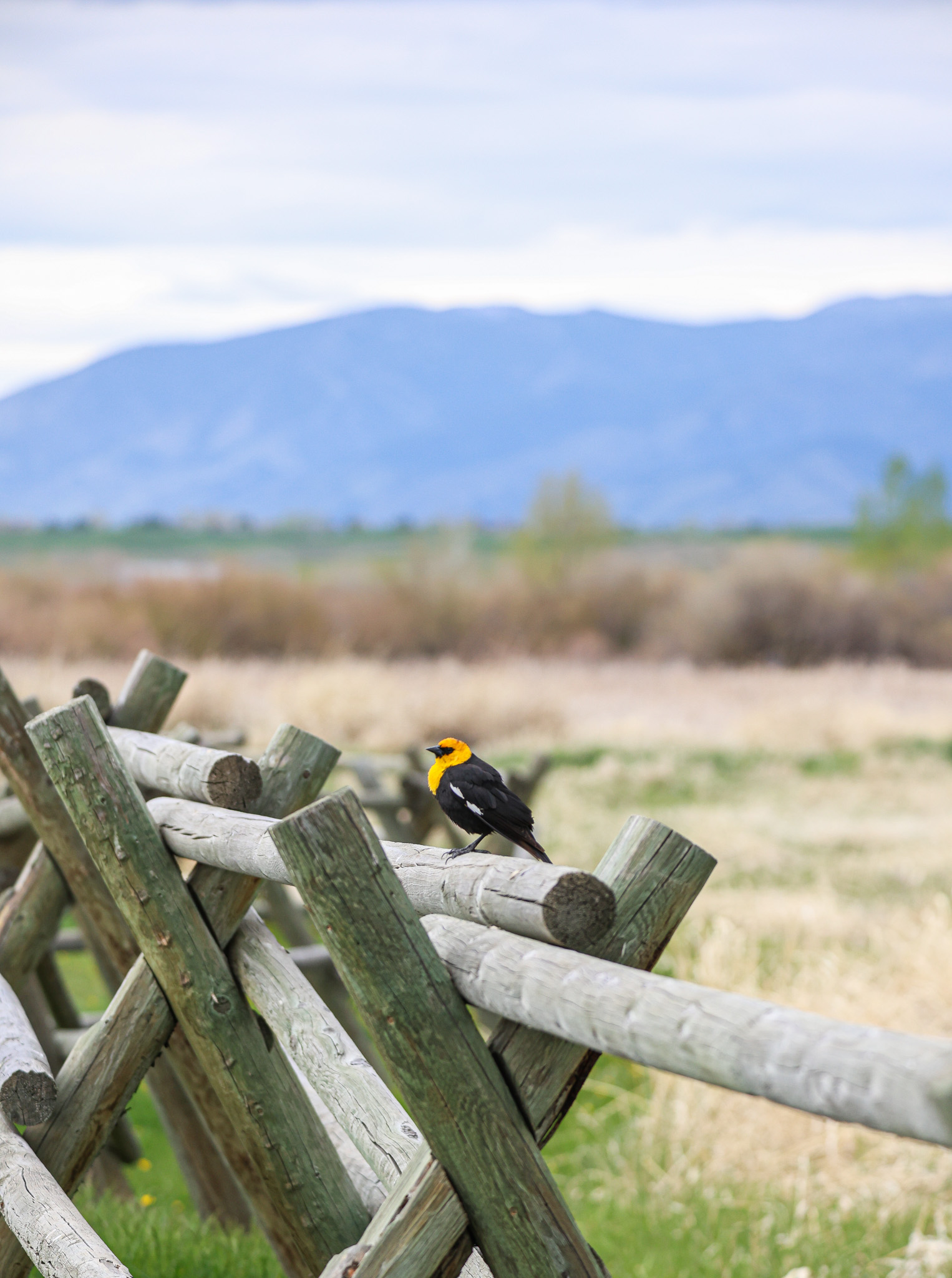
The quintessential Montana ranch look — rustic, open, and built for properties where character and practicality matter as much as containment. Jack leg fencing uses crossed wooden legs anchored by their own weight rather than posts set in the ground, which makes it well suited to rocky or frozen soils where traditional post setting is difficult. Although it offers less containment than a wired or solid fence, it defines property boundaries and acreage edges with a distinctly Western aesthetic that fits naturally into the Gallatin Valley landscape.
Wood Privacy Fence
The most requested fencing type in Bozeman residential neighborhoods. Cedar and pressure-treated pine are the standard choices — both hold up well in Montana’s climate when properly set and sealed. In addition, we install dog-ear, flat-top, and board-on-board styles depending on the homeowner’s preference and neighborhood aesthetic.
Wood Picket Fence
Classic picket fencing for front yards, garden borders, and decorative property definition. Although lower in profile than privacy fencing, it offers a wide range of cap and spacing styles. Of all wood species, cedar holds up best for picket work given Bozeman’s moisture levels and temperature swings.
Vinyl Fencing
Low maintenance and highly durable in freeze-thaw conditions — vinyl doesn’t rot, warp, or need painting. Although it costs more upfront than wood, the long-term maintenance demand is significantly lower, which is why it suits rental properties and HOA communities especially well.
Chain Link Fencing
The practical, durable choice for utility fencing — pet containment, commercial perimeters, utility areas, and back yards where privacy isn’t the priority. Both galvanized and vinyl-coated options are available. Because of its straightforward installation and lower material cost, chain link is the most economical fencing type we offer.
Split Rail Fencing
The classic Montana and Western look — open, rustic, and well suited for properties where natural aesthetics matter more than full containment. Split rail is common throughout the Gallatin Valley in rural residential and acreage settings, and it integrates into the landscape in a way that solid fencing simply does not.
Ranch & Agricultural Fencing
Woven wire, barbed wire, and board fencing for agricultural properties, hobby farms, and rural acreage throughout the Gallatin Valley. Because post spacing, depth, and corner bracing are critical for agricultural fence performance, we approach these jobs with a fundamentally different standard than we bring to residential work.
Fence Repair Services
Most fence damage in Bozeman results from frost heave, snow load, rot, or vehicle and wind impact. Here’s what we repair most often — and why each repair matters to the long-term performance of the fence.
Post Replacement
Rotted bases, frost-heaved posts, and snapped posts are the most common fence failure point in Bozeman. When a post fails, we pull it, auger a new hole to below frost depth, and set the replacement in concrete — so the same section doesn’t let go again two winters later.
Board & Panel Replacement
Cracked, warped, broken, or missing fence boards and panels are replaced to match the existing material and spacing. To ensure a clean result, we match wood species and profile as closely as possible so the repaired section blends naturally with the surrounding fence rather than standing out as a visible patch.
Leaning Section Repair
Sections that have heaved, shifted, or pulled away from adjacent sections get re-plumbed, re-secured, and braced. In many cases, full repair is achievable without replacing the post — provided the post base is still structurally sound and the concrete footing beneath it remains intact.
Gate Repair & Replacement
Sagging gates get re-hung, hardware gets replaced, and misaligned latches get adjusted. When a gate is too far gone, we rebuild or replace it entirely. Because gates are the highest-wear component of any fence, the fix needs to be done properly — not just adjusted and left to fail again next season.
Rail Repair
Broken, rotted, or missing top and bottom rails — the horizontal members that hold fence boards in place — get replaced to restore structural stability. Without sound rails, even new boards will shift and loosen over time, which is why rail integrity is fundamental to overall fence performance.
Staining & Sealing
After repair or installation, wood fences benefit substantially from staining or sealing. We apply penetrating stain or sealant to protect against moisture, UV, and weathering — extending fence life well beyond what an untreated surface can sustain, particularly at Bozeman’s elevation where UV intensity runs high.
Why Bozeman’s Climate Demands Proper Fence Installation
Fences built without accounting for Bozeman’s soil and climate fail faster and cost more to maintain. Here’s what we account for on every installation — and why each factor matters.
Frost Heave & Post Depth
Bozeman’s frost line runs 36–48 inches deep. Posts set shallower than frost depth heave upward through multiple freeze-thaw cycles, causing sections to tilt and pull apart. To prevent that entirely, every post goes in below frost depth — no exceptions.
Concrete Footings
In Bozeman’s clay-heavy soils, posts set in packed gravel or dirt alone won’t hold long-term. Instead, every post goes into a concrete footing that resists lateral movement and anchors it through heave cycles — providing the stability that loose fill simply can’t offer.
Snow Load on Panels
Heavy snow accumulation on solid privacy fencing creates real lateral load on posts through a Bozeman winter. Consequently, proper post sizing and spacing — not cutting corners on materials — is what keeps panels standing when a storm drops a foot or more.
Wood Selection for Montana
Not all lumber performs equally in Montana’s climate, and the difference becomes obvious within a few seasons. For that reason, we use cedar and quality pressure-treated pine — materials with natural rot resistance that hold up to Bozeman’s moisture conditions and temperature swings.
UV & Weathering
Bozeman’s high-altitude sun and dry summers break down wood far faster than most homeowners expect. As a result, staining or sealing at installation — and repeating it every few years — extends fence life and preserves appearance in ways untreated wood simply can’t match.
Clay Soil Drainage
Bozeman’s clay soils hold moisture around post bases, and that trapped moisture is the primary driver of rot at ground level. Through proper backfill and concrete footing design, we manage moisture contact at the most vulnerable point in the entire fence assembly.
How a Fence Installation Works
From layout to final board — done right so it stands straight for years.
Layout & Assessment
Before any digging starts, we walk the fence line, confirm measurements, discuss material and style options, and identify grade changes or obstacles. We also call 811 to mark underground utilities — a step that’s non-negotiable regardless of scope.
Post Setting
Once the layout is confirmed, posts go in below frost depth, set plumb at correct spacing, poured in concrete, and left to cure fully before any load goes on them. This step determines everything that follows — a fence is only as straight and stable as its posts.
Rails & Panels
After posts have cured, rails go on, boards or panels are installed at consistent spacing and height, and corners and end posts get finished cleanly. Gates are hung and hardware is installed at this stage as well.
Finish & Cleanup
Finally, excess concrete gets cleaned from post bases, the site gets cleared of material and debris, the gate is adjusted for proper swing and latch, and stain or sealant goes on if requested. We leave the property cleaner than we found it.
What Makes Our Fence Work Different
Built for Montana’s Winters
Proper frost depth, concrete footings, and quality materials — not shortcuts that look fine in summer and fail by spring. Because we understand what Bozeman’s freeze-thaw cycles actually do to a fence over time, we build them to stand straight year after year.
Honest Repair vs. Replace Advice
We assess your fence and give you a straight answer — not an upsell to full replacement when targeted repairs are clearly the right call, and not a patch job on a fence that genuinely needs to come down. That honesty is foundational to everything we do.
Part of a Bigger Service
Fence work pairs naturally with exterior painting, power washing, deck repair, and landscape work. In many cases, therefore, we combine those projects into a single visit so your whole exterior gets addressed efficiently at once.
Residential to Rural
A backyard privacy fence in a Bozeman subdivision and a ranch fence on 20 acres outside Manhattan require fundamentally different approaches. Regardless of scale, we bring the right method to every fencing project across the Gallatin Valley.
Built Plumb & Level
A fence that isn’t plumb, square, and consistent looks worse than no fence at all. We take the time to set posts correctly and install boards and panels at proper spacing and alignment — because in the end, finish quality is what you actually live with every day.
Responsive & Reliable
We respond promptly, show up when we say we will, and finish the job as scoped. In a market where reliable exterior work is genuinely hard to find, that consistency is ultimately what our reputation is built on.
Fence Installation Built for the Gallatin Valley
Bozeman’s residential neighborhoods vary widely in fencing needs, HOA requirements, and city guidelines. Older established neighborhoods near downtown have different fence cultures and setback expectations than newer subdivisions on the east and west sides. In contrast, properties in Four Corners and Belgrade often sit on larger lots where fence scale, post spacing, and material choice differ significantly from in-city residential work.
When to Install — Seasonality and Ground Conditions
Fence installation is year-round work in the Gallatin Valley, though summer and fall are the most popular windows. Unfrozen ground is easier to auger, and concrete cures more reliably in moderate temperatures. Beyond that practical advantage, a summer or fall installation gives footings time to cure fully before the first hard freeze. This in turn means posts go into winter already anchored and stable. We handle repair work in any season that ground conditions allow.
Rural & Acreage Fencing
The Gallatin Valley has a significant rural residential and agricultural community — hobby farms, horse properties, and acreage lots outside Bozeman city limits in areas like Gallatin Gateway, Manhattan, and Three Forks. As a result, rural fencing is a substantial and regular part of what we do.
We install ranch fencing, woven wire, split rail, and agricultural-grade board fencing for these properties. Post spacing, brace post installation, and corner bracing are all handled to agricultural standards — because the demands of a working fence on acreage are fundamentally different from a residential backyard, and the two shouldn’t be approached the same way.
Large-acreage fencing projects are quoted by the linear foot with a full scope assessment before work begins.Contact Us for Rural Fencing →
Fence Installation Service Areas — Bozeman & the Gallatin Valley
We install and repair fencing throughout Bozeman and the surrounding Gallatin Valley — residential, rural, and commercial.
Bozeman, MT Big Sky, MT Belgrade, MT Four Corners, MT Manhattan, MT Three Forks, MT Livingston, MT Gallatin Gateway, MT
Fence Installation & Repair FAQ
What types of fencing do you install?
We install wood privacy fences, wood picket fences, vinyl fencing, chain link fencing, split rail fencing, and ranch-style fencing. We work with homeowners throughout the Gallatin Valley to select the right material for the property, budget, and intended use.
Can you repair an existing fence rather than replacing it?
Yes. Many fences that appear to need full replacement can be saved with targeted repairs. Some examples of this would be replacing rotted posts, re-securing leaning sections, replacing damaged boards or panels, and rehanging or replacing gates. We assess the full fence first, then give you an honest recommendation based on what we actually find.
How does Bozeman’s climate affect fencing?
Bozeman’s freeze-thaw cycles are hard on fence posts. Frost heave pushes posts upward and out of alignment over multiple winters, causing sections to lean or pull apart. Beyond the movement issue, heavy snow loads can collapse unsupported panels, and spring moisture accelerates rot in wood posts set in clay soils. To counter all of this, posts are set at proper depth with concrete footings and materials are used that are genuinely suited to Montana’s climate.
Do I need a permit to build a fence in Bozeman?
It depends on fence height and location. Generally, fences under 6 feet in residential areas don’t require a permit. However, fences in front yards, on corner lots, or near sight-distance triangles may have additional restrictions. We recommend confirming with the City of Bozeman Development Services before installation starts. From there we can advise based on your specific property and intended fence location.
How long does fence installation take?
A standard residential fence installation — posts set in concrete, panels or boards installed, and gate hung. This usually takes one to two days depending on linear footage and terrain. Repairs generally wrap up in a single visit, though larger scopes may need a follow-up.
Do you install fencing in Belgrade and the surrounding Gallatin Valley?
Yes. We install and repair fencing throughout the Gallatin Valley including Belgrade, Four Corners, Manhattan, Three Forks, Livingston, and Gallatin Gateway.